

Coffee Guides
Manual Coffee Grinder: A Guide to Better Coffee
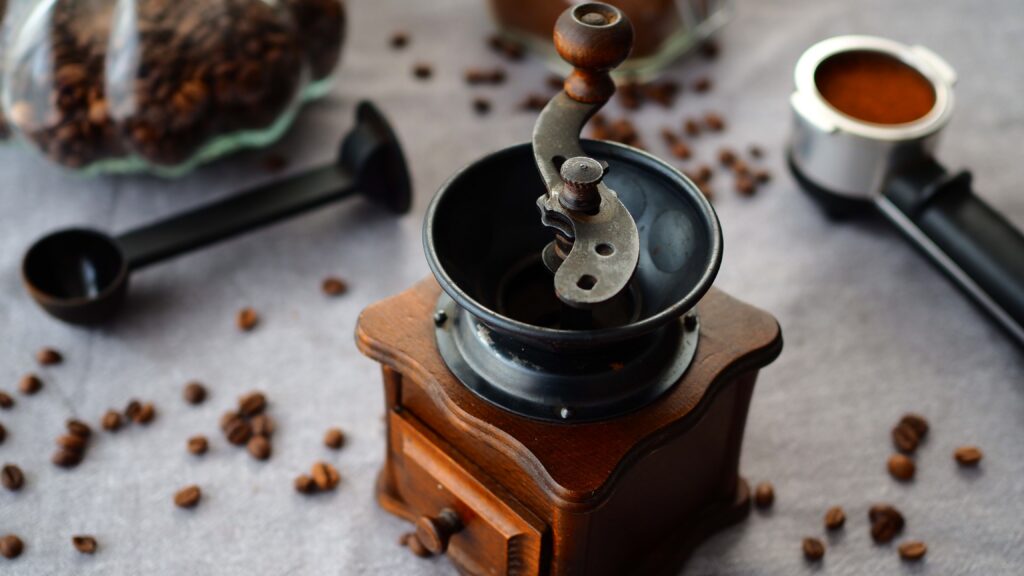
Great coffee starts long before the first sip. While coffee beans, water quality, brewing technique, and temperature all influence the final cup, one of the most important factors is often overlooked: the grind. A manual coffee grinder gives us direct control over this crucial step, allowing us to grind whole beans immediately before brewing and adjust the particle size to suit different brewing methods.
For coffee enthusiasts who want a more intentional brewing experience, a manual grinder is more than a simple kitchen accessory. It becomes part of the ritual. Instead of relying on pre-ground coffee or a basic blade grinder, we can grind only what we need and fine-tune the texture according to the brewing method. This combination of freshness and control can make a noticeable difference in the aroma, flavor, and balance of the finished cup.
Why Freshly Ground Coffee Matters
Once coffee beans are ground, their increased surface area allows aromatic compounds to escape and exposes the coffee to more oxygen. This is one reason freshly ground coffee is generally preferred over coffee that has been ground long before brewing. By grinding whole beans immediately before preparing a cup, we can preserve more of the characteristics that make a particular coffee interesting.
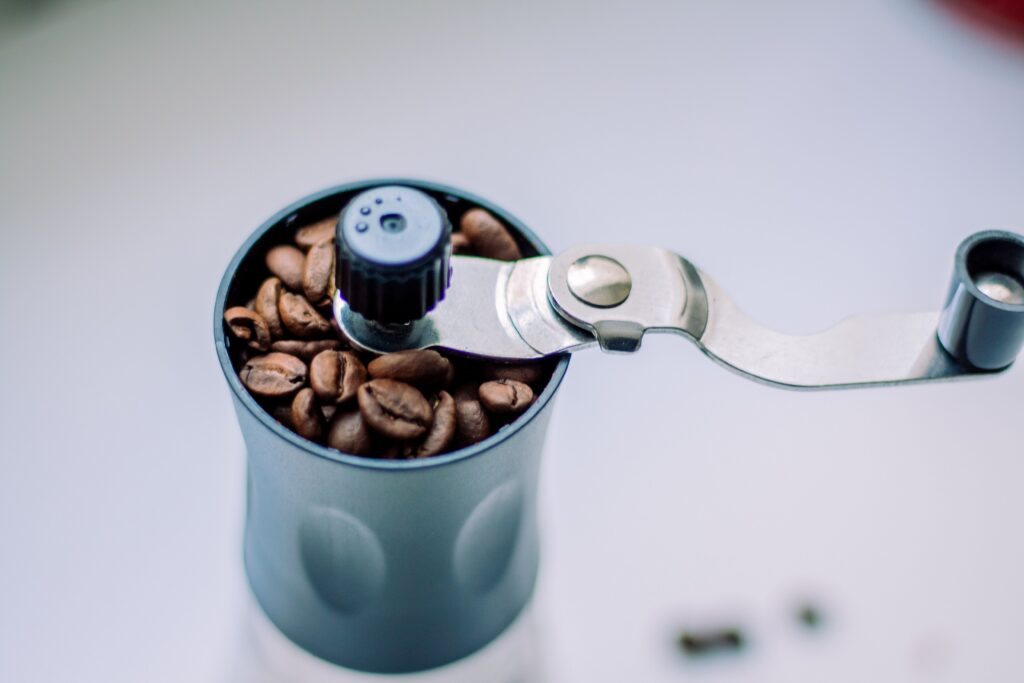
A manual coffee grinder is particularly useful because it makes fresh grinding practical without requiring electricity. We measure the beans, select the desired grind setting, and turn the handle. The process is straightforward, portable, and easy to incorporate into a daily coffee routine. Fresh grinding also allows us to work with different beans. A light roast with floral or citrus notes may benefit from a different grind approach than a darker roast with chocolate and nutty characteristics. Rather than treating every coffee the same way, we can adjust our preparation to bring out the qualities we enjoy most.
How a Manual Coffee Grinder Works
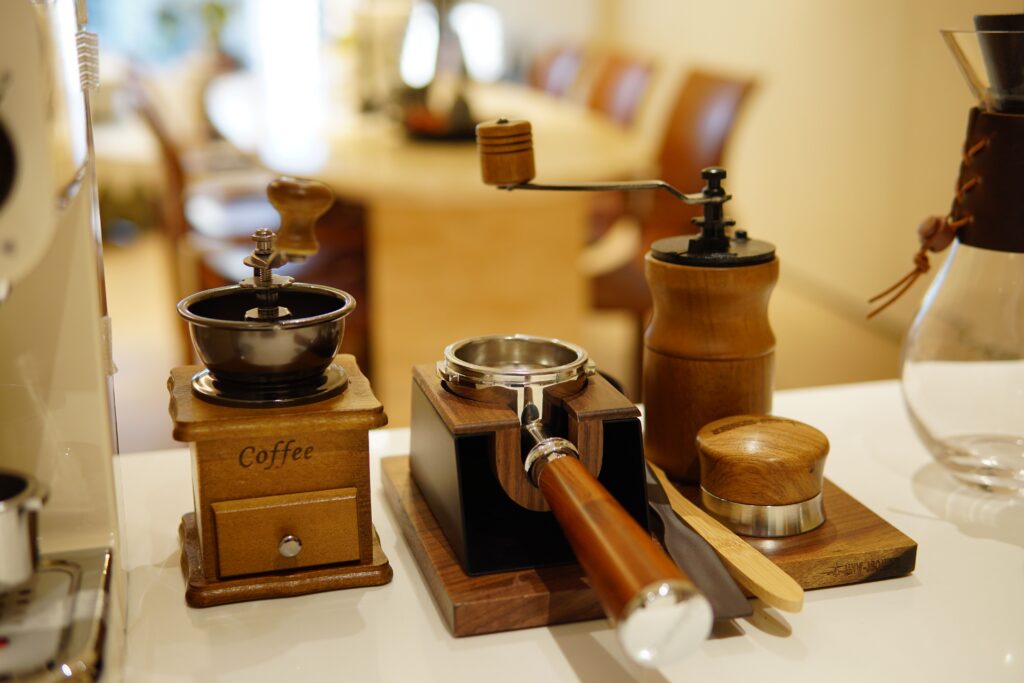
Most quality manual coffee grinders use burrs rather than blades. Burrs grind coffee beans between two abrasive surfaces, producing particles according to the distance between them. The adjustment mechanism allows us to move the burrs closer together or farther apart. The principle is relatively simple: a smaller gap generally produces a finer grind, while a larger gap produces a coarser grind. This control is important because different brewing methods require different particle sizes.
Unlike blade grinders, which chop beans into varying-sized particles, burr grinders are designed to provide greater consistency. Consistent grounds help water interact with the coffee more predictably, which can contribute to a more balanced extraction. For anyone learning specialty coffee at home, this control is valuable. Instead of simply asking whether coffee tastes good or bad, we can begin adjusting individual variables and understand why a particular cup tastes sour, bitter, weak, or overly heavy.
Choosing the Right Grind Size for Your Brewing Method
There is no single “perfect” grind size for every coffee. The appropriate setting largely depends on the brewing method and how long the water interacts with the grounds. For espresso, we generally need a fine grind because water passes through the coffee under pressure over a relatively short period. For pour-over coffee, a medium-fine to medium grind is a common starting point. Drip coffee generally works with a medium grind, while French press requires a much coarser texture because the grounds remain immersed in water for several minutes. Cold brew typically calls for a coarse to extra-coarse grind.
A useful starting reference is:
| Brewing Method | Typical Grind |
| Espresso | Fine |
| Moka Pot | Fine to medium-fine |
| Pour Over | Medium-fine |
| Drip Coffee | Medium |
| French Press | Coarse |
| Cold Brew | Coarse to extra-coarse |
These descriptions should be treated as starting points rather than absolute rules. Grind settings are not standardized between grinder models, meaning a setting that produces a medium grind on one grinder may not produce exactly the same result on another. The best approach is to begin with a reasonable setting and make small adjustments based on taste and brewing performance.
How to Use a Manual Coffee Grinder
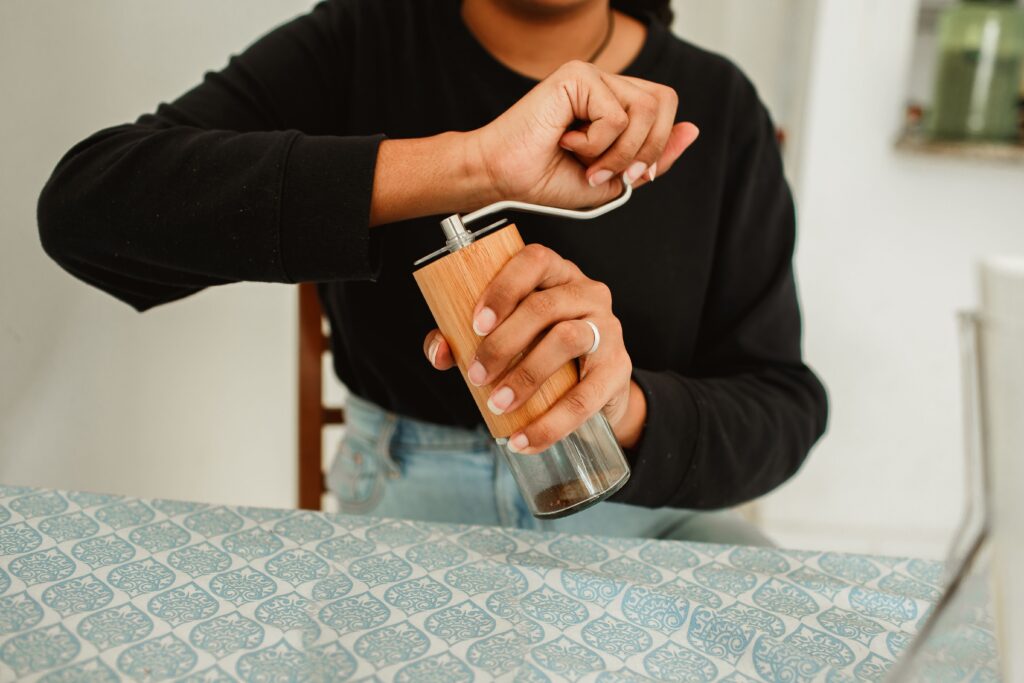
Using a manual coffee grinder is straightforward, but consistency in technique can improve the results. First, measure the amount of whole coffee beans required for your brew. Grinding only the amount needed for each preparation helps us avoid unnecessary exposure of ground coffee to air. Next, select the grind setting before grinding. For a pour-over, start with a medium-fine setting. For a French press, move toward a coarser setting. If the grinder has numbered adjustment steps, remember that those numbers are specific to that grinder rather than universal measurements.
Add the beans to the grinder and hold it securely. Turn the handle steadily rather than aggressively. A consistent motion can make grinding more comfortable and help maintain a predictable process. Once the beans have been ground, transfer the coffee directly into your brewer and begin brewing. The entire routine becomes a simple sequence: measure, grind, brew, and enjoy.
How Grind Size Changes Coffee Flavor
Grind size affects how quickly water can extract compounds from coffee. A finer grind provides greater surface area, which can allow extraction to happen more quickly. A coarse grind exposes less surface area and generally slows extraction. If a coffee tastes excessively bitter, harsh, or dry, the grind may be too fine for the particular recipe or brewing method. If the coffee tastes noticeably sour, thin, or underdeveloped, the grind may be too coarse, although water temperature, brewing time, coffee dose, and other variables can also contribute.
This is why we should avoid changing several variables simultaneously. If we change the grind size while keeping the coffee dose and brewing process consistent, it becomes easier to understand the effect. For example, if a pour-over tastes weak and acidic, we might make the grind slightly finer and brew again. If the result becomes overly bitter or the water drains too slowly, we can move to a slightly coarser grind. Small adjustments often provide more useful information than making dramatic changes.
Manual Coffee Grinder vs Electric Grinder
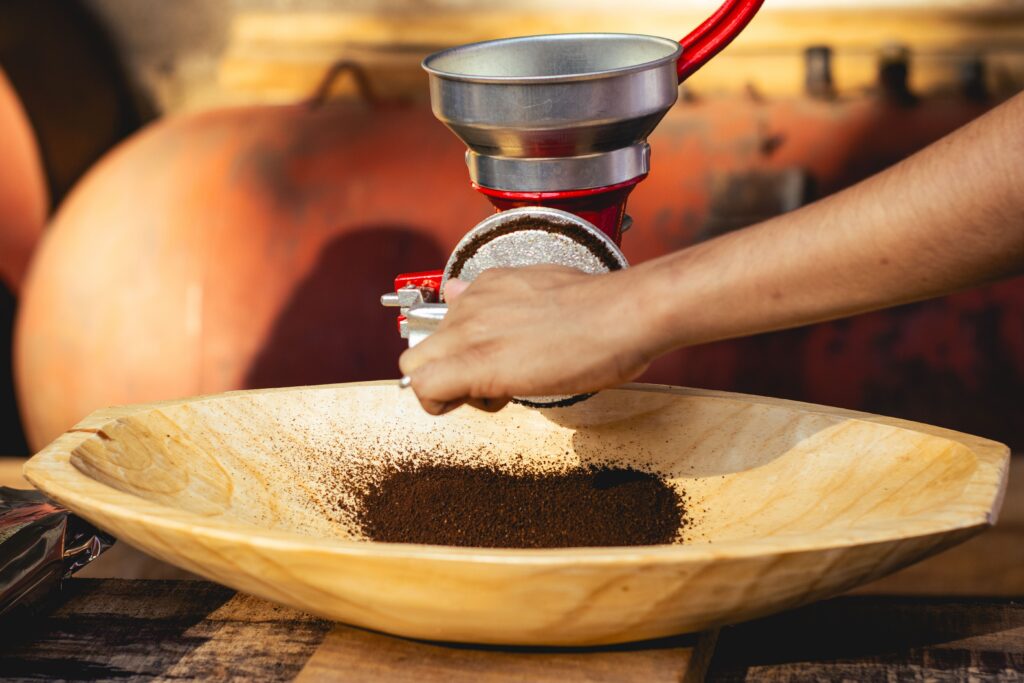
The biggest advantage of a manual coffee grinder is its simplicity. It does not require a power outlet, making it convenient for travel, camping, offices, and small kitchens. It also gives us a hands-on connection to the brewing process. Electric grinders, meanwhile, can be more convenient when preparing several cups or grinding large quantities. For someone making multiple batches every day, an electric grinder’s speed may be more practical.
For individual brewing, however, a manual grinder can provide an excellent balance between portability, control, and simplicity. It is especially attractive to people who enjoy preparing one or two cups at a time and want to be more involved in the brewing process.
What to Look for in a Manual Coffee Grinder
When selecting a manual coffee grinder, we should look beyond appearance and consider how it will fit into our brewing routine. A reliable burr system is important because consistent grinding is central to repeatable brewing. We should also consider the adjustment mechanism. A grinder with multiple settings provides greater flexibility for switching between espresso, pour-over, French press, and other brewing styles.
Build quality matters as well. A sturdy body, comfortable handle, stable grip, and smooth grinding mechanism can make frequent use much more enjoyable. If portability is important, a compact design can make the grinder easier to take to the office or on a trip. Capacity should also match our needs. Someone preparing a single cup may prefer a compact grinder, while households brewing several cups may benefit from a larger capacity.
Cleaning and Maintaining Your Grinder
Regular cleaning helps maintain the performance and flavor quality of a manual grinder. Coffee particles and oils can accumulate around the burrs and grinding chamber over time. After regular use, we can use a soft brush to remove loose coffee particles. Avoid introducing unnecessary moisture into components that are not designed to be washed. For deeper cleaning, follow the manufacturer’s instructions to safely remove and clean the burr assembly. It is also useful to avoid leaving old coffee grounds inside the grinder for extended periods. Residual grounds can affect the flavor of subsequent brews and make it more difficult to achieve consistent results.
Why a Manual Coffee Grinder Belongs in Every Coffee Setup
A quality manual coffee grinder gives us something that pre-ground coffee cannot: control. We control when the beans are ground, how fine or coarse they become, and how that grind works with our chosen brewing method. More importantly, it encourages us to understand coffee rather than prepare it. We can experiment with different beans, grind settings, brewing times, and recipes to discover what produces the flavors we enjoy.
For home brewers, travellers, and coffee enthusiasts building a more intentional coffee routine, a manual coffee grinder can be one of the most practical upgrades to a brewing setup. Combined with fresh whole beans and a thoughtful brewing process, it helps turn an ordinary cup of coffee into a more consistent and rewarding experience.
At GoHustle Coffee, we believe great coffee is not only about the beans—it is about how we bring them to life. With the right grinder and brewing approach, every cup gives us another opportunity to explore better flavor, greater consistency, and the craft behind great coffee.
Coffee Cups and Mugs
304 Stainless Steel Coffee Mug with Lid
38.88Original price was: 38.88.21.88Current price is: 21.88.Coffeeware
Coffee Distributor Espresso Leveler Adjustable Palm Tamper
27.88Original price was: 27.88.15.88Current price is: 15.88.Coffee Cups and Mugs
Double Wall Glass Coffee Mug with Handle
Coffee-Making Accessories
EspressoPro Knock Box – Anti-Slip Coffee Grounds Container
28.88Original price was: 28.88.11.88Current price is: 11.88.Coffee Cups and Mugs
Glass Measuring Cup with Wooden Handle
30.88Original price was: 30.88.15.88Current price is: 15.88.Coffee Cups and Mugs
Heat-Resistant Striped Glass Cup
28.88Original price was: 28.88.14.88Current price is: 14.88.Coffee-Making Accessories
MHW-3BOMBER Spring Loaded Espresso Tamper 51/53/58mm
160.88Original price was: 160.88.105.88Current price is: 105.88.Coffee-Making Accessories
MINI USB Rechargeable Milk Frother
23.88Original price was: 23.88.11.88Current price is: 11.88.Coffee-Making Accessories
Portable Disposable Drip Coffee Filter Bags
30.88Original price was: 30.88.15.88Current price is: 15.88.Coffee-Making Accessories
Pour Over Coffee Dripper Set
72.88Original price was: 72.88.43.88Current price is: 43.88.