

General Info
Coffee Scale With Timer: Is It Worth It?
Introduction
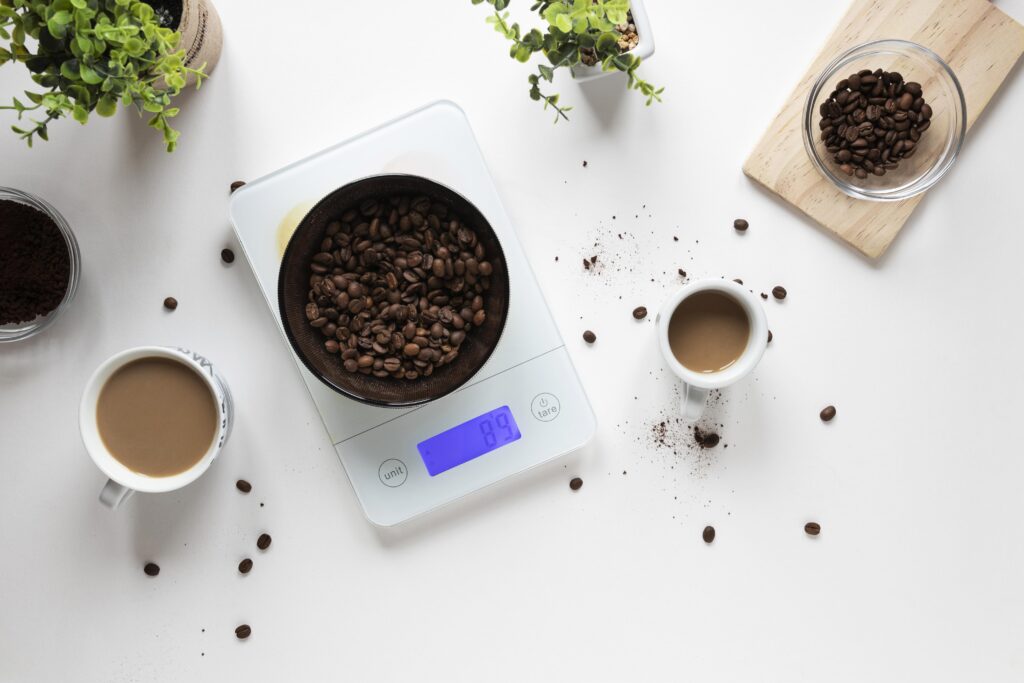
Making great coffee at home isn’t just about choosing high-quality beans or owning an expensive brewing machine. Small details, including how much coffee we use, how much water we add, and how long the brew takes, can significantly affect the final flavour. For coffee enthusiasts who want more consistency, a coffee scale with a timer offers a practical way to control these variables without overcomplicating the brewing process.
Unlike a standard kitchen scale, a dedicated coffee scale often combines precise weight measurement with a built-in timer. This lets us monitor coffee dosage and brewing time with a single device, making it especially useful for pour-over, AeroPress, and other manual brewing methods.
But is investing in a coffee scale with a timer worth it? Understanding its features, benefits, and limitations can help us decide whether this tool belongs in our home coffee setup.
What Is a Coffee Scale With Timer?
A coffee scale with timer is a digital weighing device that measures coffee and water while tracking brewing time. Most models display weight in grams and include a stopwatch or countdown function, letting us monitor multiple brewing variables at once. The weighing function helps us accurately measure coffee beans, ground coffee, and brewing water. Meanwhile, the timer tracks key stages, such as blooming, pouring, steeping, or espresso extraction.
For example, when preparing pour-over coffee, we might use 20 grams of ground coffee and approximately 300 grams of water. A scale lets us measure these quantities rather than estimate them by eye. The timer then helps us follow a repeatable brewing schedule.
Some models offer additional features, including automatic timing when brewing begins, flow-rate displays, rechargeable batteries, and water-resistant surfaces. However, these features vary by product, so choose a model that suits your brewing preferences rather than paying for functions you may never use.
1. Why Accurate Measurements Matter for Better Coffee
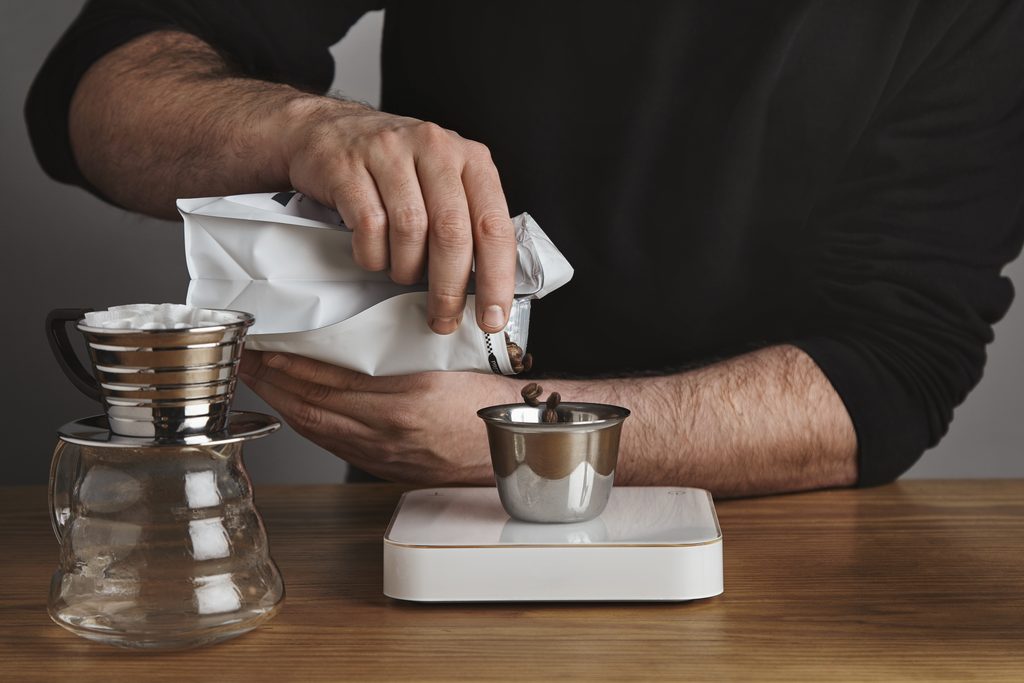
One of the biggest advantages of using a coffee scale with timer is the ability to reproduce a successful recipe. Without accurate measurements, even small changes in coffee dosage or water quantity can shift a brew’s balance. Imagine preparing coffee using two tablespoons of grounds each morning. Although this approach may seem convenient, the actual weight can vary depending on the grind size, bean density, and how tightly the grounds are packed. A digital scale removes much of this uncertainty.
We can begin with a coffee-to-water ratio of approximately 1:15 to 1:17 for many manual brewing methods. For instance, 20 grams of coffee with 320 grams of water gives a 1:16 ratio. From there, we can adjust the recipe to our preferred strength and flavour. The timer adds another layer of consistency. If a particular recipe tastes balanced when brewed over three minutes, recording that duration gives us a useful reference for future attempts.
Accurate measurements do not automatically guarantee excellent coffee, since bean freshness, grind size, water temperature, and pouring technique also matter. However, they make it easier to identify which changes improve the result.
2. How a Built-In Timer Improves Brewing Control
Brewing time influences how water interacts with coffee grounds and extracts flavour compounds. Although the ideal duration varies by brewing method and recipe, tracking time helps us understand and repeat the process.
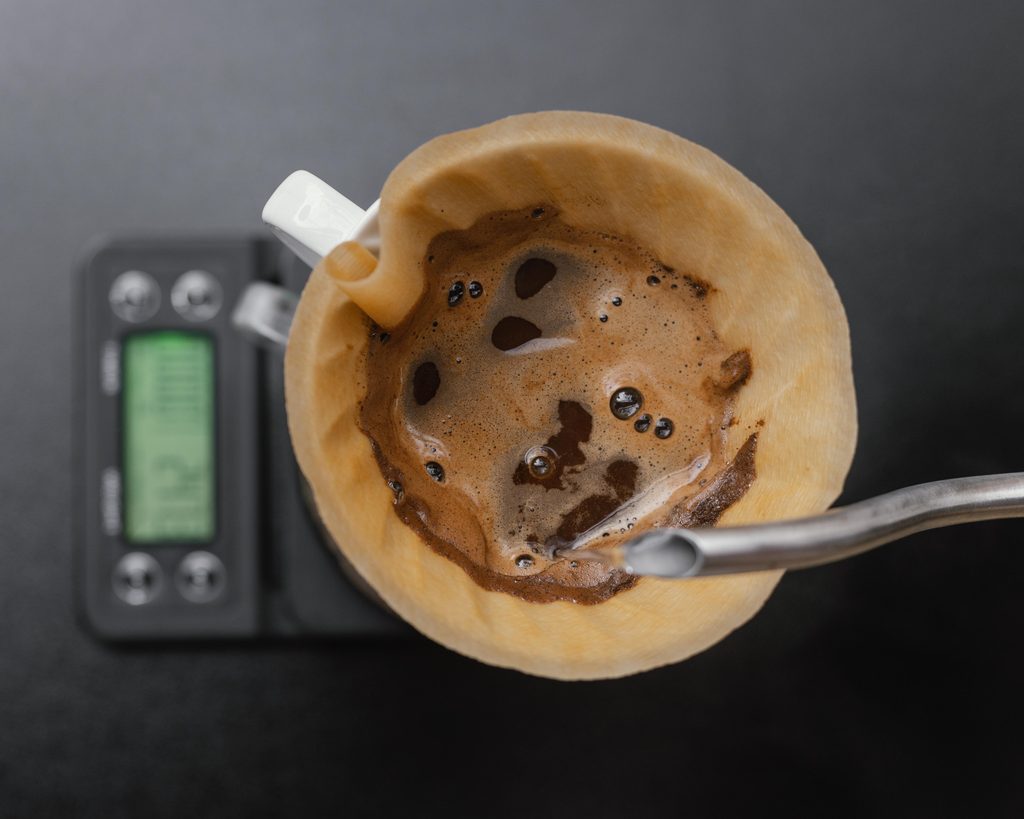
For pour-over coffee, a timer is especially helpful during the bloom stage. Blooming involves adding a small amount of water to freshly ground coffee and letting it release trapped gases before we continue with the main pour. A controlled bloom helps us follow the same routine across different brewing sessions. The timer can also guide the remaining pours. If our recipe calls for adding water gradually over several stages, we can track when each stage begins and how long the whole process takes.
For AeroPress brewing, a timer helps monitor steeping time before pressing. For espresso, it can measure shot duration alongside the weight of the extracted coffee, helping us compare recipes and make adjustments. Remember that brewing time shouldn’t be treated as an isolated measure of quality. A longer brew isn’t necessarily better, and a shorter brew isn’t automatically worse. Use timing alongside taste, grind size, water temperature, and coffee dosage to determine what works best for your beans.
3. Essential Features to Look for in a Coffee Scale
You don’t need to buy the most expensive coffee scale. The most useful features depend on how we prepare coffee and how much precision our preferred method requires.
Measurement accuracy and resolution should be among our first considerations. A scale with 0.1-gram increments can help with espresso, where small differences in dosage and yield may matter. For many pour-over recipes, a reliable scale that displays whole grams can also provide useful control, though finer resolution offers more flexibility.
A responsive timer and clear display make brewing easier. The screen should stay visible while you pour, and the controls should be simple enough to use without interrupting the brew. Some models start the timer automatically, while others require manual activation.
Size and weighing capacity also matter. A compact scale may fit neatly beneath a pour-over dripper or espresso cup, but it should still accommodate your equipment. Check the dimensions and maximum capacity before purchasing.
Finally, consider battery life, charging options, surface durability, and splash resistance. Coffee preparation involves hot water, so a scale designed for brewing conditions is generally more practical than one thatis hard to clean or vulnerable to moisture.
4. Coffee Scale With Timer vs Standard Kitchen Scale
A standard kitchen scale can measure coffee and water effectively, making it a reasonable choice for beginners. If we already own one that measures accurately enough and has enough capacity for our brewing equipment, we may not need to buy a separate coffee scale right away. The main difference is convenience. With a standard scale, we may need to use a separate phone or stopwatch to monitor brewing time. A coffee scale with a timer combines these functions, so you don’t have to switch between devices.
Dedicated coffee scales may also feature faster weight updates, compact designs, specialised brewing modes, or automatic timing. These features can make manual brewing more comfortable, especially when we need to monitor weight while pouring. However, not every coffee scale is more accurate than every kitchen scale. Product specifications and real-world responsiveness matter more than the category name alone. For occasional home brewing, a basic scale and separate timer may be sufficient. If you brew pour-over coffee daily or experiment with espresso recipes, an integrated device can streamline your workflow.
5. How to Use a Coffee Scale With Timer for Pour-Over Coffee
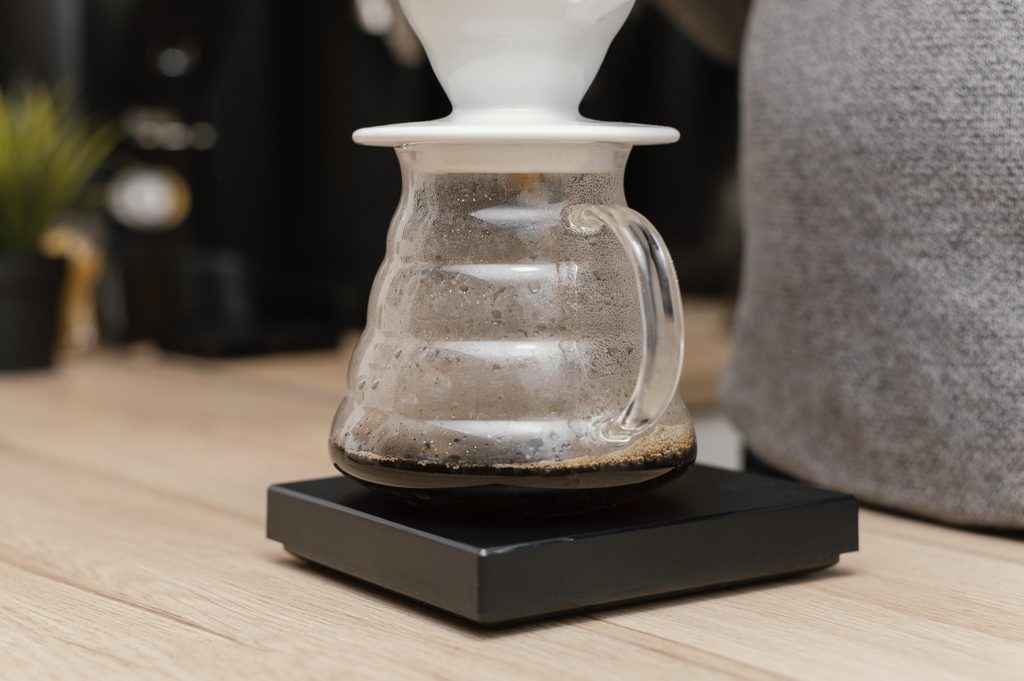
Start with a straightforward recipe to understand how the scale and timer work together. First, place the dripper and filter on the scale, then tare the device to zero. Add 20 grams of freshly ground coffee and gently level the coffee bed.
Next, start the timer as you begin pouring. Add about 50–60 grams of water to saturate the grounds evenly, then let the coffee bloom for about 30–45 seconds. These values are a starting point, not a universal rule, since bean freshness and recipe preferences can affect the ideal bloom. Continue pouring gradually until the scale displays approximately 320 grams of total water. Pour slowly and evenly rather than adding all the water at once.
Observe the total brewing time and taste the finished coffee. If it tastes sour or underdeveloped, consider adjusting the grind size, water temperature, or pouring technique. If it tastes excessively bitter or harsh, review those same variables rather than assuming the timer alone is responsible. Record the recipe and any changes you make. By adjusting one variable at a time, we can learn how each change affects flavour and gradually develop a brewing routine that suits our preferences.
6. Common Mistakes When Using a Coffee Scale
Even with accurate equipment, a few common mistakes can reduce brewing consistency. One mistake is forgetting to tare the scale after placing the brewing equipment on it. This causes the displayed weight to include the dripper, cup, or other items rather than only the ingredients we intend to measure. Another is changing several variables simultaneously. If we change the coffee dosage, grind size, water temperature, and brewing time at once, it becomes difficult to tell which adjustment improved the flavour.
We should also avoid following a fixed brewing time without considering the coffee itself. Different beans and brewing methods can behave differently, so a recipe that works well for one coffee may need adjustment for another. Finally, keep the scale clean and dry according to the manufacturer’s instructions. Coffee residue and water can affect the weighing surface, while unsuitable cleaning methods may damage the device.
Is a Coffee Scale With Timer Worth Buying?
A coffee scale with timer is a worthwhile investment for people who value repeatability, enjoy experimenting with brewing recipes, or want to develop greater control over their coffee preparation. Combining weight measurement and timing in one device makes it easier to follow recipes, compare results, and understand how brewing variables influence flavour. For beginners, a simple, reliable model is usually enough. More experienced brewers may appreciate finer measurement increments, automatic timing, and other specialised features.
Ultimately, the best coffee scale supports your preferred brewing method without adding unnecessary complexity. With fresh beans, an appropriate grinder, quality water, and a willingness to experiment, it becomes a useful tool for making better coffee more consistently.
Explore more practical equipment advice and brewing techniques in the Hustle Coffee Brew Guides, where we can keep building our understanding of home coffee preparation, one cup at a time.
Coffee Cups and Mugs
304 Stainless Steel Coffee Mug with Lid
38.88Original price was: 38.88.21.88Current price is: 21.88.Coffeeware
Coffee Distributor Espresso Leveler Adjustable Palm Tamper
27.88Original price was: 27.88.15.88Current price is: 15.88.Coffee Cups and Mugs
Double Wall Glass Coffee Mug with Handle
Coffee-Making Accessories
EspressoPro Knock Box – Anti-Slip Coffee Grounds Container
28.88Original price was: 28.88.11.88Current price is: 11.88.Coffee Cups and Mugs
Glass Measuring Cup with Wooden Handle
30.88Original price was: 30.88.15.88Current price is: 15.88.Coffee Cups and Mugs
Heat-Resistant Striped Glass Cup
28.88Original price was: 28.88.14.88Current price is: 14.88.Coffee-Making Accessories
MHW-3BOMBER Spring Loaded Espresso Tamper 51/53/58mm
160.88Original price was: 160.88.105.88Current price is: 105.88.Coffee-Making Accessories
MINI USB Rechargeable Milk Frother
23.88Original price was: 23.88.11.88Current price is: 11.88.Coffee-Making Accessories
Portable Disposable Drip Coffee Filter Bags
30.88Original price was: 30.88.15.88Current price is: 15.88.Coffee-Making Accessories
Pour Over Coffee Dripper Set
72.88Original price was: 72.88.43.88Current price is: 43.88.